Cycling in the Alpilles
Cycling in the Alpilles: the complete guide to riding in Provence
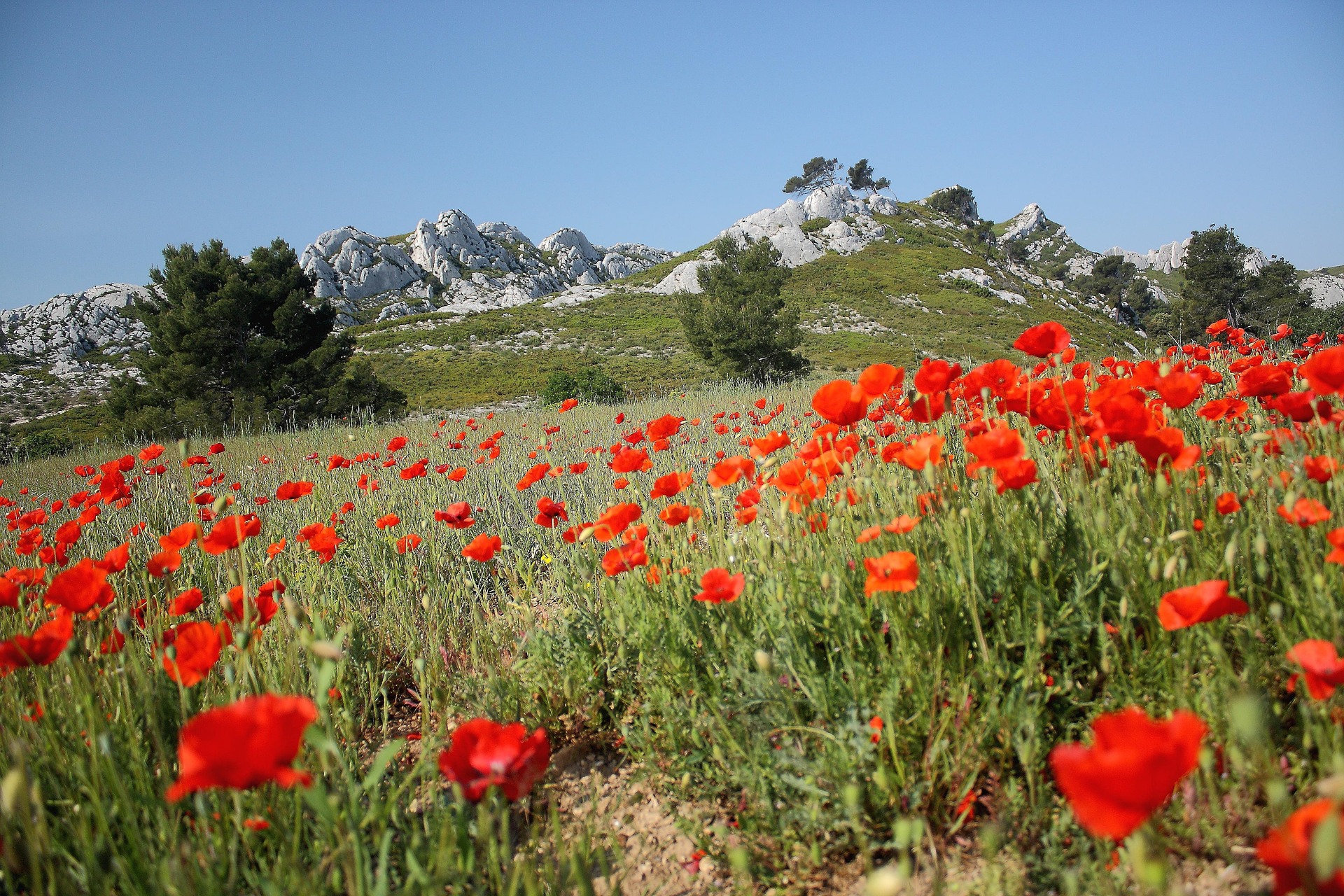
The Alpilles do not have the altitude of the great Alpine passes, nor the legendary status of Mont Ventoux. That is precisely what makes this limestone massif in the Bouches-du-Rhône one of the most quietly compelling cycling destinations in southern France. Stretching roughly twenty-five kilometres on its east-west axis, the range packs a density of landscapes, heritage and well-constructed routes that few French territories can match at this scale. White rock carved by erosion, sun-baked garrigue, olive groves, vineyards, perched villages and quiet roads: everything a cyclist could want, contained within a territory compact enough to explore thoroughly in a few days.
Whether you are a gravel rider looking for limestone tracks, a road cyclist in search of well-rounded loops, or an e-bike rider wanting to take the villages at your own pace, the Alpilles deliver. This guide covers the essentials for planning a cycling trip to this corner of Provence.
The Alpilles at a glance: a massif built for cycling
The Parc naturel régional des Alpilles was created on 30 January 2007. It covers 51,000 hectares, including around 25,000 hectares of agricultural land, and its canal network extends over 400 kilometres. The highest point of the massif is the Tour des Opies at 498 metres.
That number is worth reading carefully. The Alpilles are not altitude terrain. The climbs are accessible, often short and punchy rather than long and grinding, and the limestone surface of the gravel tracks has a particular quality — firm and well-draining after winter rain, consistent enough to reward a wide variety of bike setups. The massif suits road bikes, gravel bikes, mountain bikes and e-bikes alike, with the latter being particularly well suited to reaching perched villages like Les Baux-de-Provence, where the approach roads demand a sustained effort.
The presence of the Parc naturel régional also means a level of landscape stewardship that is felt on the ground: limited development, maintained paths, and a territorial coherence that makes navigation both logical and rewarding.
When to ride in the Alpilles
Spring and autumn are the most enjoyable seasons for cycling in the Alpilles. Temperatures are moderate, the vegetation is either in full bloom or still present, and the roads carry a fraction of the summer traffic.
Winter riding is possible. Daytime temperatures generally sit between 5 and 15 degrees, but the mistral — the cold, dry wind characteristic of Provence — can be a significant factor. Some cycling events in the area have recorded gusts of 30 to 50 km/h on exposed sections, which turns a straightforward out-and-back into something rather more demanding. It is worth building your route with the wind direction in mind.
Summer requires a specific note. From 1 June to 30 September, access to the natural and forested areas of the Alpilles is regulated by prefectural order due to wildfire risk. Restrictions can extend to full public closure of the massif depending on the alert level in force on any given day. Before any summer ride on the massif's tracks and paths, it is essential to check the official page of the Préfecture des Bouches-du-Rhône covering forest access, or the MyProvence application, for the current day's conditions. This is not optional — it is the starting point of any responsible summer ride in the area.
Cycling routes in the Alpilles: loops for every level
The Val d'Enfer loop: the Alpilles classic
This is the reference itinerary for discovering the heart of the massif. Starting and finishing in Saint-Rémy-de-Provence, it covers 41.2 kilometres with 365 metres of elevation gain, rated as moderate difficulty, and typically takes around four hours to complete. It is a well-constructed loop that sequences the key highlights of the territory without feeling like a checklist.
The route leaves Saint-Rémy via the D5 towards the Glanum archaeological site, picks up the D27 and then climbs four kilometres towards Les Baux-de-Provence — a perched village listed among the Plus Beaux Villages de France. The descent through the Val d'Enfer that follows is one of the defining moments of the loop: a valley of white rock shaped by erosion and ancient quarrying, a landscape Jean Cocteau chose as the setting for filming Le Testament d'Orphée. The return leg passes through Maussane-les-Alpilles, Paradou, Fontvieille and Saint-Étienne-du-Grès before completing the circuit back to Saint-Rémy.
Several stops along the way reward the effort of the detour. The Carrières de Lumières at Les Baux is an immersive digital art centre occupying over 7,000 square metres of former quarry space, running large-scale projections since 2012. The Glanum archaeological site is one of the major ancient ensembles in the south of France. The Barbegal Roman aqueducts, dating from the second century, carried water via two parallel channels to a mill complex near what is now Fontvieille. The Moulin d'Alphonse Daudet in Fontvieille, built in 1814 and in operation until 1915, now serves as a museum dedicated to the author of Letters from My Windmill. The route also skirts the Canal des Alpines septentrionales, a 119-kilometre irrigation network built between 1826 and 1875.
The Roquemartine loops: for riders who want more
Two variants exist in this sector, both officially referenced by the Chemins des Parcs. The shorter option covers 31 kilometres with 406 metres of climbing. The full Roquemartine loop extends to 64 kilometres with 690 metres of elevation gain, making it the most demanding road cycling circuit in the area — a genuine workout, though well within reach of a rider in reasonable form.
The Tour des Alpilles: a multi-day itinerary
For cyclists who want to explore the massif over several days, the Parc naturel régional supports a three-day touring itinerary departing from Saint-Étienne-du-Grès. Over three days, the stages pass through Saint-Étienne-du-Grès and Les Baux-de-Provence before finishing near Mouriès. A two-day version is also feasible with a single overnight stop at Les Baux. It is a lightweight touring format that fits the scale of the massif well, visiting the key villages without accumulating unnecessary distance.
Gravel cycling in the Alpilles
Gravel riders will find the Alpilles particularly interesting. The limestone geology of the massif, with occasional bauxite deposits, produces track surfaces that vary considerably with season and aspect. The "Du Piémont à la Crau verte" route covers 35 kilometres with 352 metres of climbing and provides a solid introduction to gravel riding in this area. Komoot and Bikemap both carry useful track data for the region, suitable as a starting point for building custom loops.
The same summer access rules apply to gravel riders as to road cyclists. Checking the daily status of the massif before any off-road ride between June and September is mandatory.
Connections to wider cycling routes
The Alpilles sit within a broader cycling network that links them to the region's major itineraries. The ViaRhôna — EuroVelo 17 — is an 815-kilometre greenway running from Lake Geneva to the Mediterranean, passing through the Côtes du Rhône vineyards and across southern Provence. A greenway section between Tarascon and Arles provides a connection point from the ViaRhôna towards the Alpilles, opening up multi-day itinerary options that combine traffic-free greenway riding with loops through the massif.
For riders planning a cycling holiday in France that combines the Alpilles with other destinations, Baroudeur Cycling offers bespoke cycling trips in France and Portugal built around your dates, level and objectives. The south of France offers several massifs within reasonable reach of each other that work well as part of a longer programme, and our itineraries are designed to make those connections coherent rather than simply logistical.
Planning your cycling trip to the Alpilles: practical notes
Where to base yourself
Saint-Rémy-de-Provence is the natural hub for most of the documented routes. The town has full services for cyclists, direct access to the massif's main itineraries, and a solid range of accommodation. Saint-Étienne-du-Grès and Fontvieille are useful alternatives for riders who want to vary their starting points or who are following the Tour des Alpilles itinerary.
Choosing your bike
For the official road loops, a standard road bike or a gravel bike with semi-slick tyres handles the terrain comfortably. For the gravel itineraries and the Parc's off-road tracks, 40mm tyres with a light tread pattern offer a good balance between rolling efficiency on tarmac and grip on the looser limestone sections. The technical difficulty stays accessible throughout — the Alpilles do not demand the same aggressive setup as more isolated or rugged terrain.
E-bikes are worth highlighting for riders who want to visit the perched villages without making the climbs the central challenge of the day. The approach to Les Baux-de-Provence in particular is one of those sections where the assistance of an e-bike changes the nature of the experience entirely, freeing up attention for the landscape rather than the effort.
Navigation
The official topos from the Chemins des Parcs and the Saint-Rémy-de-Provence Tourist Office are reliable references, with elevation profiles, points of interest and safety notes. Komoot and Bikemap offer complementary track selections for riders building custom itineraries. In summer, checking the daily massif access status is the first step of any ride preparation — before looking at the weather, before checking tyre pressure.
The Alpilles as part of a wider cycling holiday in France
The Alpilles share a quality with several other Provençal destinations: compactness. In a few days, it is possible to complete the main documented loops, stop in the villages that justify stopping in, and leave with a genuine sense of having read the territory rather than simply passed through it.
For riders looking to combine the Alpilles with other destinations in France or Portugal, Baroudeur Cycling runs cycling holidays in France and Portugal with itineraries that connect the south of France to the Algarve and other destinations we know in detail. If you are drawn specifically to gravel riding across both countries, our gravel cycling tours in Portugal offer a natural extension to a Provence-based trip — different geology, different light, same standard of terrain.
For riders planning a trip independently who want guidance on choosing the right format, the article how to choose your cycling trip with Baroudeur Cycling is a useful starting point.
Conclusion
The Alpilles make no attempt to impress through scale. There is no iconic col, no summit that demands weeks of preparation. What this Provençal massif offers instead is a balance that is genuinely hard to find: good terrain, extraordinary heritage, quiet roads and a natural environment that has been looked after. A landscape that suits serious cyclists precisely because it has nothing to prove.
Whether you are planning a single day out of Saint-Rémy or a three-day tour of the massif, the Alpilles tend to stay with you for the simplest reasons: the quality of the light on white limestone, the silence of the garrigue in the late afternoon, and the particular pleasure of riding through a landscape that has not been dressed up for the occasion.
To explore Baroudeur Cycling's guided and bespoke cycling trips in France, visit our cycling holidays France and Portugal page.