Which Bike to Choose for a Touring Trip? Complete Guide for a Successful Cycling Adventure
Which Bike to Choose for a Touring Trip: Your Complete Guide to the Perfect Cycling Adventure
Selecting the right bike transforms your touring experience from challenging to unforgettable across France and Portugal's finest routes
Whether you're planning a multi-day bikepacking expedition in complete self-sufficiency, a fully supported cycling holiday with comprehensive logistics, or an immersive gravel exploration through remote trails, choosing the right bike for your touring trip represents the crucial foundation for comfort, performance, and maximum enjoyment throughout your journey.
At Baroudeur Cycling, we organize meticulously crafted premium cycling holidays in France and Portugal — particularly in the stunning Algarve region, a unique cycling playground offering varied terrain for all riding styles (road, gravel, bikepacking). But which bike should you actually choose for a successful touring adventure? A nimble road bike, a versatile gravel bike, a robust touring bike, or even a mountain bike — each category delivers specific advantages you must match with your travel style, technical level, and exploration goals.
Road Bike: Speed and Efficiency for Long Distances on Smooth Tarmac
If your cycling tour follows predominantly smooth asphalt and well-maintained roads with minimal off-road sections, a high-performance road bike remains the most efficient and comfortable choice for covering substantial daily distances.
Key Advantages of Road Bikes for Touring
Lightweight and fast: Top-tier carbon or high-end aluminium frames with optimized components prove perfect for 80-150 km daily rides on flat or rolling terrain. The weight savings translate directly into less fatigue over consecutive days.
Aerodynamic riding position: The forward-leaning posture reduces wind resistance, allowing you to maintain higher average speeds (25-30 km/h) with moderate effort. This efficiency becomes increasingly valuable as daily distances accumulate.
Ideal for supported cycling holidays: When a support vehicle transports your luggage, you ride light with only essentials — water bottles, snacks, repair kit, phone. You focus purely on riding pleasure without logistical burden. This approach suits our road cycling holidays perfectly.

Limitations to Consider
Strictly tarmac-bound: Narrow tyres (23-28mm) and race-oriented geometry prove unsuitable for dirt roads, gravel tracks or forest paths. High risk of punctures and considerable discomfort on rough surfaces limits route flexibility significantly.
Comfort challenges on very long distances: The aerodynamic position can strain your neck and lower back after many hours in the saddle. Road bikes also transmit more vibration than gravel or touring bikes, which accumulates over time.
If you join one of our Algarve road cycling holidays, a properly fitted road bike becomes your perfect companion to savour coastal Atlantic panoramas, winding back-country lanes, and sunny climbs characteristic of southern Portugal's exceptional cycling terrain.
Gravel Bike: Maximum Versatility and True Freedom
The gravel bike has emerged as the most versatile and adaptive option for modern cycle touring. It allows efficient riding on tarmac, compact dirt roads, farm tracks, forest trails and gravel — offering genuine route flexibility and unmatched freedom of exploration.
Why Choose Gravel for Your Touring Adventure
Exceptional terrain versatility: From smooth roads to compacted dirt and forest tracks, wide tyres (38-50mm) absorb surface irregularities beautifully. This grants access to spectacular, off-the-beaten-track routes completely unreachable on a road bike. The versatility proves particularly valuable when weather conditions deteriorate or when you want to explore quieter alternatives.
Comfortable and stable ride: More relaxed geometry (higher stack, moderate reach) and semi-upright position reduce neck and back strain significantly. Longer wheelbase ensures stability when loaded with bags. Genuinely comfortable for long days covering 100-150km without discomfort.
Excellent load-carrying capacity: Multiple mounting points for bikepacking bags (frame, fork, rear rack) and water bottle mounts make gravel bikes fully adaptable from lightweight day rides to fully loaded multi-week expeditions. This flexibility means one bike serves multiple purposes.
Disc brakes for all conditions: Consistent, powerful braking performance in rain, mud or rough terrain proves essential for loaded descents or variable weather conditions. The confidence this provides cannot be overstated when touring in unfamiliar territory.
Minor Trade-offs
Slightly reduced speed on smooth asphalt: Wider tyres increase rolling resistance, typically reducing average speed by 2-3 km/h compared with an equivalent-level road bike. However, most touring cyclists find this marginal difference insignificant compared to the versatility gained.
Heavier than road bikes: Reinforced frames and components add weight (typically 10-11kg versus 8-9kg for road bikes), which you'll notice on steep climbs. The comfort and versatility for multi-terrain, multi-day rides more than compensates for this modest weight penalty.
Our gravel cycling holidays in the Algarve are specifically designed to explore hidden paths and wild landscapes of southern Portugal — a unique cycling experience alternating between red Mediterranean earth and dramatic Atlantic coastline. Discover also our Lisbon to Sagres gravel tour for an epic coast-to-coast adventure.
Touring Bike: Robustness and Comfort for Long-Term Adventures
For extended cycle touring (weeks or months), fully self-sufficient travel, or mixed terrain with heavy luggage, a classic touring bike with steel frame remains a proven, reliable choice with decades of heritage.
What Makes Touring Bikes Ideal for Distance Travel
Maximum comfort for consecutive long days: Geometry designed specifically for repeated 80-120km days over weeks maintains comfort. Upright and relaxed position reduces muscle fatigue significantly. Steel frames absorb vibration naturally, whilst wide touring saddles ensure long-term comfort.
Strong frame engineered for heavy loads: Reinforced steel tubing supports 25-40kg of luggage (front and rear racks, handlebar bags) without compromise. Stable geometry prevents handling issues even when fully loaded, crucial for safe descents.
Durable wheels and tyres: Robust 700c or 650b wheels with 36 spokes and double-wall rims paired with 32-42mm tyres offer excellent balance between comfort and puncture resistance on mixed terrain. These wheels withstand the rigours of loaded touring far better than lightweight alternatives.
Global repairability: Standard components (metric hardware, common bearings) prove easy to maintain or replace anywhere globally — ideal for remote regions where specialist parts remain unavailable. This universal compatibility provides invaluable peace of mind.
Trade-offs of Touring Bikes
Heavy and less manoeuvrable: Base bike weight around 13-15kg, with total weight easily reaching 40-50kg with bags. This makes handling more challenging on narrow paths or steep climbs, requiring different riding techniques.
Less reactive and sporty: Relaxed geometry and substantial weight reduce responsiveness considerably. These bikes aren't intended for aggressive riding or technical terrain but rather steady-pace touring (60-80km daily) prioritizing reliability over performance.
If you're planning fully autonomous travel for several weeks or months across multiple countries with wild camping and comprehensive gear, a well-equipped steel touring bike with racks, full mudguards, hub dynamo and robust tyres offers unmatched reliability, comfort, and worldwide repairability.
Mountain Bike: For Technical Off-Road Touring
Whilst less common for traditional touring, hardtail or full-suspension mountain bikes suit specific expedition-style trips on predominantly rough, technical terrain where gravel bikes reach their limits.
When to Choose a Mountain Bike
Very rough terrain dominance: If your route crosses sustained technical trails, rocky paths, or challenging single-track, a mountain bike's suspension and geometry provide necessary capability and comfort. The wider tyres (2.1-2.4 inches) handle loose surfaces confidently.
Remote expedition touring: For truly wild routes where trail conditions remain unknown and unpredictable, the robust construction and capability of mountain bikes provide security. The ability to handle virtually any surface condition offers valuable flexibility.
Significant Limitations
Heavy and inefficient on roads: Mountain bikes feel sluggish and energy-sapping on tarmac or smooth surfaces due to weight, wide tyres, and suspension bob. Your average speed decreases substantially, making longer road sections particularly tiring.
Limited luggage capacity: Fewer mounting points compared to touring or gravel bikes restrict carrying capacity. Full-suspension designs particularly limit options for frame bags and rear racks.
For most cycle touring scenarios, a capable gravel bike handles rough sections adequately whilst performing far better on varied terrain. Reserve mountain bikes for genuinely technical expedition routes.
Choosing Your Bike: Practical Decision Framework
Match Bike to Your Route Profile
Predominantly tarmac (80%+ paved): Road bike for maximum efficiency and comfort on smooth surfaces. Perfect for our road cycling holidays in Portugal exploring the legendary N2 route.
Mixed terrain (50% tarmac, 50% unpaved): Gravel bike provides optimal versatility without compromise. Ideal for our Faro to Lisbon gravel tour crossing diverse Portuguese landscapes.
Predominantly unpaved (70%+ off-road): Robust touring bike or gravel bike with wider tyres handles sustained rough surfaces comfortably. Consider our gravel adventures exploring wilder Portuguese terrain.
Technical single-track focus: Mountain bike becomes necessary for genuinely challenging off-road sections beyond gravel capability.
Consider Your Luggage Strategy
Supported tours with vehicle: Road bike maximizes riding pleasure when logistics are handled. You carry minimal gear and focus purely on cycling. Our fully supported holidays provide this worry-free experience.
Lightweight bikepacking (3-5 days): Gravel bike with frame bag, saddle bag and handlebar roll carries sufficient gear whilst maintaining excellent handling and performance. Learn more about packing strategies in our bikepacking guide.
Full touring setup (weeks/months): Traditional touring bike with front and rear racks provides maximum capacity and stability for extended autonomous travel with camping equipment.
Factor in Your Fitness and Experience
Beginner to intermediate cyclists: Gravel bike's comfortable position and versatility builds confidence across varied terrain. The stable handling inspires security whilst learning. Read our guide on avoiding beginner mistakes for additional confidence.
Experienced road cyclists: High-performance road bike on supported tours maximizes your existing strengths and delivers the responsive ride you appreciate. Challenge yourself on our demanding Algarve climbs.
Adventurous explorers: Gravel bike opens possibilities beyond tarmac, revealing hidden routes and authentic experiences impossible on purely road-oriented bikes. Discover the authentic side of the Algarve through our gravel explorations.
Essential Components for Touring Bikes
Beyond frame choice, specific components significantly impact touring comfort and reliability across extended distances.
Gearing for Varied Terrain
Wide range essential: Touring requires lower gears than pure road riding, particularly when loaded. Compact or sub-compact chainrings (48/32 or 46/30) combined with wide-range cassettes (11-34 or 11-36) handle steep climbs without destroying your knees.
Reliability over weight: Robust mechanical groupsets prove more reliable and field-repairable than lightweight or electronic alternatives. Shimano Deore, 105 or GRX groupsets offer excellent durability at reasonable cost.
Wheels and Tyres
Strong wheels crucial: Hand-built wheels with 32 or 36 spokes and double-wall rims handle touring loads reliably. Machine-built lightweight wheels often fail under sustained heavy use.
Tyre width matters: Wider tyres (32-42mm for touring bikes, 38-50mm for gravel) provide comfort and puncture resistance. Tubeless setup reduces puncture risk further whilst allowing lower pressures for additional comfort.
Puncture protection: Tyres with robust casings and puncture-resistant layers prove worthwhile investments, particularly for remote touring where spare tubes may be unavailable.
Comfort Components
Quality saddle: Brooks leather saddles remain touring classics for good reason, though modern cushioned alternatives work excellently. Whatever you choose, ensure proper fitting and break-in before your tour.
Handlebar options: Drop bars provide multiple hand positions crucial for long days. Consider wider bars (42-46cm) for improved control when loaded. Some tourers prefer butterfly or trekking bars for maximum position variety.
Ergonomic grips: Quality bar tape or grips reduce hand fatigue and numbness significantly over long distances. Consider padded options for additional comfort.
Bike Rental Versus Ownership
When Renting Makes Sense
Infrequent touring: If you tour once or twice yearly, rental (£40-80 daily) avoids substantial initial investment whilst providing well-maintained, tour-ready bikes. Our bike rental service in Portugal offers precisely this convenience.
Air travel logistics: Renting eliminates airline bike fees (£50-150 each way), risk of damage, and transportation hassles. You arrive and ride immediately without concerns about bike boxes or assembly.
Testing before buying: Rental allows experiencing different bike types on actual tours before committing to purchase. This practical approach prevents expensive mistakes.
Maintenance-free experience: Rental bikes arrive professionally serviced with all necessary equipment included. No pre-tour preparation stress or post-tour maintenance requirements.
When Ownership Proves Better
Regular touring: If you tour frequently (monthly or more), ownership costs less long-term than repeated rentals. Your own bike also fits perfectly and feels familiar.
Specific requirements: Particular fitting needs, preferred components, or specialized setups prove difficult to replicate with rental bikes. Custom builds address unique requirements precisely.
Emotional connection: Many cyclists develop strong attachment to their touring bikes, appreciating the memories and experiences shared. This intangible value matters significantly to some riders.
Preparing Your Bike for Touring
Whichever bike you choose, proper preparation prevents mechanical issues disrupting your adventure.
Pre-Tour Maintenance
Professional service: Have your bike thoroughly serviced 2-3 weeks before departure. This allows time for identifying and addressing any issues without last-minute panic.
Essential checks: Brake pads replaced if worn, chain and cassette assessed for wear, wheels trued and spoke tension checked, all bearings adjusted, tyres inspected for cuts or wear, all bolts checked for proper torque.
Test fully loaded: Complete at least one 50-80km ride with your full luggage setup before departure. This reveals fit issues, weight distribution problems, or equipment failures before they occur on tour.
Spare Parts and Tools
Carry essentials: Spare tubes, puncture repair kit, tyre levers, multi-tool, chain tool, spare chain links, spare brake pads, spare derailleur hanger (if mechanical), cable ties, duct tape. Weight these items carefully against likelihood of need.
Know basic repairs: Practice fixing punctures, adjusting brakes and gears, removing and reinstalling wheels. These skills prove invaluable when problems occur far from bike shops.
Baroudeur Cycling: Your Touring Partner
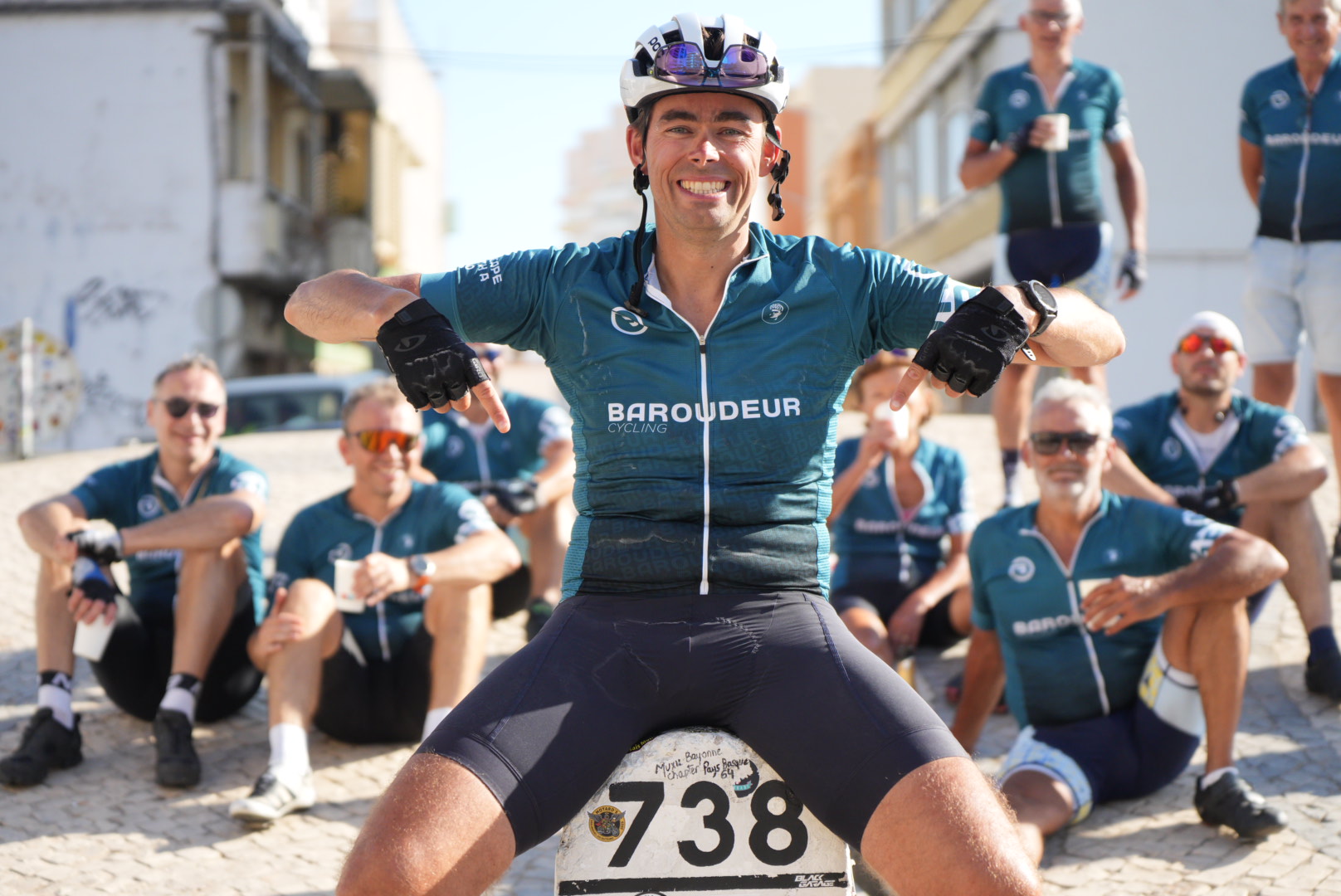
At Baroudeur Cycling, we understand that bike choice represents just one element of successful cycle touring. Our expertise extends across every aspect of your adventure.
Expert Guidance
Founded by Jérôme Cousin, former World Tour professional cyclist who raced multiple Tours de France, we bring genuine professional expertise to recreational cycle touring. We've tested every bike type across thousands of kilometres on Portuguese and French roads.
Our knowledge helps you choose correctly from the start, avoiding expensive mistakes and ensuring your bike matches your actual needs rather than theoretical ideals or marketing claims.
Comprehensive Support
Whether you choose our fully supported cycling holidays with vehicle support, or our custom cycling trips tailored precisely to your preferences, we handle every detail so you focus purely on riding and experiencing.
Our support includes pre-trip bike recommendations, fitting advice, packing guidance, on-tour mechanical assistance, route expertise, and all logistics. We transform touring complexity into smooth, memorable adventures.
Premium Destinations
Our carefully crafted tours showcase the finest cycling in France and Portugal's exceptional cycling regions. The Algarve particularly offers unique terrain diversity perfect for any bike type — smooth coastal roads for road bikes, endless gravel tracks through cork forests, challenging climbs, and hidden trails.
Training and Preparation
Choosing the right bike means nothing without proper fitness. Our cycling coaching programme prepares you physically for your tour with personalized training plans. Learn how to fuel properly for long-distance cycling and train effectively with our professional training camp methods.
Making Your Final Decision
There's no universally "best" bike for touring — only the right bike for your specific tour. Base your decision on these core factors: terrain profile, distance ambitions, luggage requirements, comfort priorities, and mechanical confidence.
For most cycle tourists, a quality gravel bike delivers the optimal balance of versatility, comfort, performance and capability across the widest range of touring scenarios. This explains the explosive popularity of gravel bikes in recent years.
For pure road touring on smooth surfaces, a proper road bike maximizes efficiency and enjoyment when you're confident in the route's condition and have support for luggage.
For extended self-sufficient touring, particularly in developing regions or very remote areas, a traditional steel touring bike's reliability and repairability provide unmatched peace of mind.
Ready to begin your cycling adventure? Whether you're drawn to the legendary N2 through Portugal, the stunning roads of the Algarve, or a bespoke route crafted specifically for you, we're here to ensure you're perfectly equipped from day one.
Frequently Asked Questions
What's the best bike for beginning cycle touring?
A versatile gravel bike offers the best starting point for most beginners: terrain adaptability, good comfort, flexibility to ride light or loaded, and confidence-inspiring handling. The forgiving nature allows learning without excessive challenge. If long-term comfort ranks above versatility, a steel touring bike provides an excellent alternative. Read our complete guide for new cyclists for additional guidance.
Can I tour successfully with a regular road bike?
Absolutely — provided your route follows exclusively paved roads and you have luggage support. For autonomous touring or routes including unpaved sections, it's genuinely not recommended: significant discomfort and mechanical vulnerability outweigh the speed advantages. Consider whether support vehicles will handle your luggage.
What distinguishes gravel bikes from traditional touring bikes?
Gravel bikes are lighter, sportier, and extremely versatile but with limited luggage capacity. Traditional touring bikes are heavier, supremely comfortable under substantial loads, and easier to repair worldwide. Gravel suits trips under 3-4 weeks; dedicated touring bikes excel for longer, more remote expeditions requiring maximum carrying capacity.
How much should I budget for a quality touring bike?
Quality gravel bikes: £1,300-2,600. Steel touring bikes: £1,500-3,000. Road bikes: £1,000-2,200. These ranges provide genuinely tour-worthy bikes that won't disappoint. Budget options often prove false economy with poor reliability. Remember that smart cycling investments pay dividends over time. Alternatively, renting (£40-80 daily) provides excellent value for occasional touring whilst eliminating storage and maintenance.
Do I need suspension for cycle touring?
Not typically. A capable gravel bike with wide tubeless tyres run at appropriate pressures handles 95% of cycle touring routes comfortably without mechanical complexity. Suspension becomes justified only for predominantly technical, rough off-road terrain genuinely requiring mountain bike capability — relatively rare in traditional cycle touring.
How do I avoid common bike-choice mistakes?
Test ride extensively before committing, prioritize comfort over speed, ensure proper professional fitting, avoid under-speccing components to save money, and don't let marketing hype override your actual requirements. Our article on fatal mistakes sabotaging cycling adventures covers this comprehensively.